
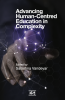
Advancing Human-Centred Education in Complexity
Keywords:
Human-centred education, Inclusive education, Contextual intelligence, Transformative pedagogy, ComplexitySynopsis
Advancing Education in a Complex World: A Human-Centred Approach advances the proposition that human-centred education (HCE) is not only timely, but essential to reimagining education systems in an era of persistent complexity, inequality and rapid technological change.
This volume brings together theoretical frameworks and empirical research that collectively challenge conventional educational paradigms. Rather than treating care, empathy and relationality as peripheral concerns, the volume positions them as foundational to meaningful learning and equitable educational practice. It argues that effective education must balance technical competencies with interpersonal and affective capacities, grounded in an understanding of interconnected social, political and economic ecosystems.
Drawing from diverse disciplines the volume demonstrates how HCE operates across multiple contexts and levels of the education system. It introduces new models and frameworks, including the Inkhulumo dialogic model, the CRAFT framework for AI integration and contextual intelligence as a lens for educational leadership.
The volume closes with reflections and recommendations on embedding HCE in teacher education, curriculum design, research practice and policy — offering a scholarly and practical contribution to the ongoing project of building more humane, inclusive and equitable education systems.
Chapters
-
Chapter 1: Advancing Education in a Complex World: A Human-Centred Approach
-
Chapter 2: Human-Centred Research: Navigating Personal, Political and Paradigmatic Worldviews
-
Chapter 3: Evholution Infused Science Education Empowers Students to Navigate their Way in the Current Global Storms of Change
-
Chapter 4: Grade 11 Learners' Adaptive Reasoning Proficiencies in Solving Euclidean Geometry Problems
-
Chapter 5: Using Participatory Action Research to Change the Landscape of Mathematics Word-Problem-Solving Instruction
-
Chapter 6: Using Binomial Logistic Regression and Receiver Operating Curves to Identify at Risk Learners
-
Chapter 7: Revolutionising Coding and Robotics Curriculum Design for Grade 4 Through Whole Brain® Thinking and Action Research
-
Chapter 8: 'Quality Talk': Human-Centred Education in a Complex Rural School Space
-
Chapter 9: Inclusive Pedagogical Approaches to Human Potential in South African Arts Education Through Meta-Research Lenses
-
Chapter 10: High Levels of Adaptability, Proactivity and Resilience as Skills aligned with the Sustainable Development Goals in Early Childhood Education
-
Chapter 11: The Development of a Gender Awareness Programme that Challenges Teachers' Perceptions and Pedagogical Practices in ECE
-
Chapter 12: Contextual Intelligence and Educational Policy: Evaluating the Influence of the Basic Education Laws Amendment Act on South African Schools
-
Chapter 13: A Strategic Approach to Advancing Human-Centred Education in Complexity
-
Chapter 14: Concluding Thoughts and the Way Forward
References
Downloads
Published
29 April 2026
Categories
Copyright (c) 2026 ESI Press
Details about the available publication format: PDF
PDF
ISBN-10 (Discontinued)
978-1-0483-0173-1 (Digital)
ISBN-13 (15)
978-1-0483-0140-3 (Print)
Details about the available publication format: PDF
PDF
ISBN-13 (15)
978-1-0483-0140-3